
Digital Camera Sensor Sizes and Thermal Imaging Sensor Sizes Explained
Infiniti WhitepaperLet’s face it, digital camera sensors are measured in ridiculous ways. If you’re trying to make sense of what dimension a 1/2.8" sensor size is referring to, or if you’re wondering how thermal imaging sensor measurements are different, you’ve come to the right place.
Pixel Pitch (How Thermal Imaging Sensors are Measured)
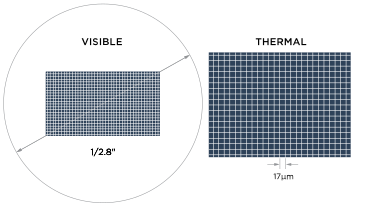
If you dig deep into the technical specifications of a digital image sensor, you’ll eventually find a measurement for the “pixel pitch” of the sensor. The pixel pitch is a more precise and straightforward measurement that unfortunately isn’t mentioned often in standard camera specifications. Thermal imaging sensors on the other hand (MWIR and LWIR), as well as SWIR sensors, are all measured by their pixel pitch.
The pixel pitch is quite simply the width of a pixel on the sensor, typically measured in microns (μm). This makes things simpler for calculating the overall physical sensor size, simply multiply the resolution by the pixel pitch. Unfortunately it creates confusion when it comes to how those thermal or SWIR sensor sizes affect the field of view and detail levels of the camera.
With standard visible light sensors, increasing the resolution without changing the sensor size increases the amount of detail in the image without changing the field of view, however when it comes to thermal imaging cameras, increasing the resolution while maintaining the pixel pitch gives the same amount of detail on an image but with a wider field of view.

Talk to a Sales Engineer
Contact us today for our expert advice on the ideal solution for you. We’ll work with you to design the ideal solution that best matches your budget and your project needs.